Peripheral Neuropathy
- Home
- Conditions Treated
- Peripheral Neuropathy
Peripheral Neuropathy Treatment
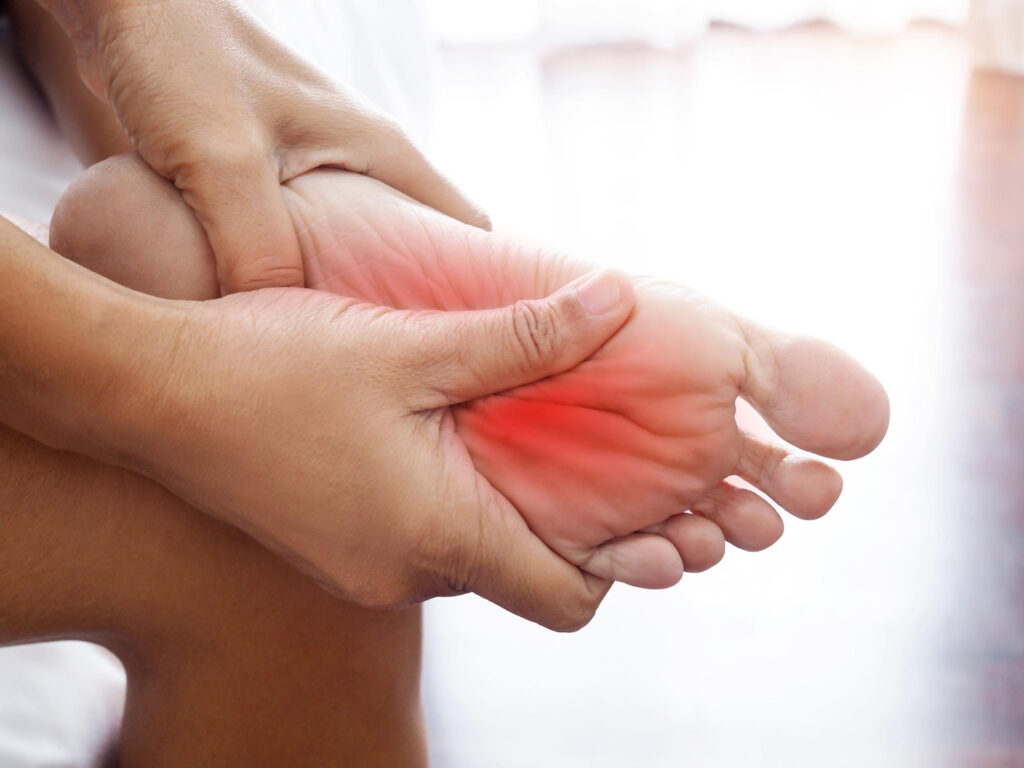
A spectrum of disorders affecting the peripheral nervous system — causing numbness, tingling, burning pain, and weakness. We address the root cause through a personalised multi-modality approach combining photobiomodulation, mechanotransduction, and targeted nerve-nourishing medications — each protocol tailored to the individual patient.
Common Risk Factors
Most common
Diabetes Mellitus
Chronic hyperglycemia damages nerve fibres through oxidative stress and advanced glycation — producing length-dependent sensorimotor neuropathy.
Toxic
Alcohol-related
Chronic alcohol use causes direct axonal toxicity and thiamine deficiency leading to painful peripheral nerve damage.
Nutritional
Vitamin Deficiencies
Deficiencies in B1, B6, B12, and folate impair myelin synthesis and axonal integrity.
Iatrogenic
Chemotherapy-induced
Neurotoxic chemotherapy agents damage dorsal root ganglia and peripheral axons.
Immune-mediated
Autoimmune Neuropathy
CIDP, vasculitic neuropathy, and Guillain-Barré involve immune-mediated attack on peripheral nerve components.
Unknown
Idiopathic
No identifiable cause despite thorough investigation — termed cryptogenic sensory neuropathy.
DIAGNOSTIC WORKUP
Clinical Examination + Nerve Conduction Study + Blood Investigations
A detailed neurological examination assesses sensory modalities, reflexes, and motor function — followed by NCS to
characterise the type, distribution, and severity of nerve involvement. Blood investigations identify treatable underlying
causes including HbA1c, B12, thyroid, and autoimmune markers.
The NCS baseline personalises
and benchmarks the treatment protocol.
Treatment Protocol
A Personalised Multi-Modality Approach-Two advanced therapies working in synergy with nerve-nourishing medications.
The selection, combination, and intensity of all modalities are personalised to each patient’s neuropathy type, NCS severity, underlying cause, and treatment response — and are continuously adjusted through the course of care.
Specific wavelengths of light energy are delivered along the course of affected peripheral nerves. This energy is absorbed by mitochondria through photobiomodulation, helping to reduce neurogenic inflammation, improve endoneurial microcirculation, and activate axonal repair mechanisms.
This approach is particularly effective for small-fibre neuropathy, burning pain, and length-dependent sensory loss, with protocols tailored to the distribution of neuropathy and NCS findings.
Mechanotransduction: promoting nerve repair through mechanical stimulus
Precise mechanical energy is applied to affected nerve territories — triggering mechanotransduction, the conversion
of mechanical stimuli into biological repair signals within nerve and connective tissue. This reduces perineural fibrosis,
activates axonal regeneration, and improves the structural microenvironment around compressed or damaged
peripheral nerves. Particularly effective in compressive neuropathies and chronic nerve entrapment. Protocol
personalised to each patient.
Nerve-Nourishing Medications
Nerve membrane stabilisers are prescribed
alongside advanced therapy — creating the biochemical environment essential for axonal repair and myelin
maintenance. Medication choice is personalised to the neuropathy subtype, underlying metabolic profile, and
symptom burden. Each modality addresses a different dimension of nerve damage — and when personalised and combined, they work synergistically. Light energy reduces inflammation. Mechanical stimulation restores structural and tissue integrity. Medications nourish from within. Together, they address peripheral neuropathy at every biological level.
SYMPTOMS — addressed at every biological level
Patients experience meaningful reduction in burning pain, tingling, and numbness alongside improvements in
balance, strength, and daily function. The personalised combination of photobiomodulation, mechanotransduction,
and nerve-nourishing medications addresses neuropathy at the inflammatory, structural, and metabolic level
simultaneously — producing outcomes that no single modality achieves alone.
| What Makes Our Practice Different | |||||
|---|---|---|---|---|---|
|
Personalised Protocols
Every plan tailored to the individual
|
Advanced Technology
Cutting-edge non-invasive therapeutic science
|
Mechanism-Based Care
We treat biology, not just symptoms
|
23+ Years Experience
Decades of specialist clinical wisdom
|
Whole Person Approach
Mind, body & lifestyle integrated
|
Objective Outcomes
Measurable results — not just relief
|
Peripheral Neuropathy Treatment in Madhapur
Peripheral neuropathy refers to nerve damage that causes pain, tingling, or numbness in the hands and feet. It can result from various conditions like diabetes or alcohol abuse.
Conditions Associated with Peripheral Neuropathy:
- Diabetic Neuropathy: Nerve damage due to high blood sugar levels.
- Guillain-Barré Syndrome: A rare condition where the body’s immune system attacks the nerves.
- Alcoholic Neuropathy: Damage caused by excessive alcohol use.
Symptoms of Peripheral Neuropathy:
- Pain, tingling, or numbness in the hands or feet
- Sensitivity to touch
- Muscle weakness or difficulty walking
When to Consult Dr. Sreekanth Vemula:
If you notice any numbness, tingling, or pain in your extremities, don’t wait to seek help. Peripheral neuropathy can worsen over time, so early treatment is crucial.
Treatment Options:
- Medications: To relieve pain and manage symptoms.
- TMS: Can help manage nerve-related pain.
- Physiotherapy: To improve muscle strength and mobility.
Services
- Epilepsy
- Dystonias
- Mood Disorders
- Vertigo
- Tinnitus
- Balance Disorders
- Obstructive Sleep Apnea
- Peripheral Neuropathy
- Migraine
- Stroke
- Trigeminal Neuralgia
- Alzheimers
- Parkinson's Disease
- Myasthenia Gravis
- Meningitis
- Bell’s Palsy
- Cerebral Palsy
- Brain Injury
- Head Injury
- Restless Leg Syndrome
- Periodic Paralysis
- Scalp Cirsoid Aneurysm
- Krabbe Disease
- Fibromyalgia