Complex Regional Pain Syndrome Treatment in Hyderabad
- Home
- Conditions Treated
- Complex Regional Pain Syndrome
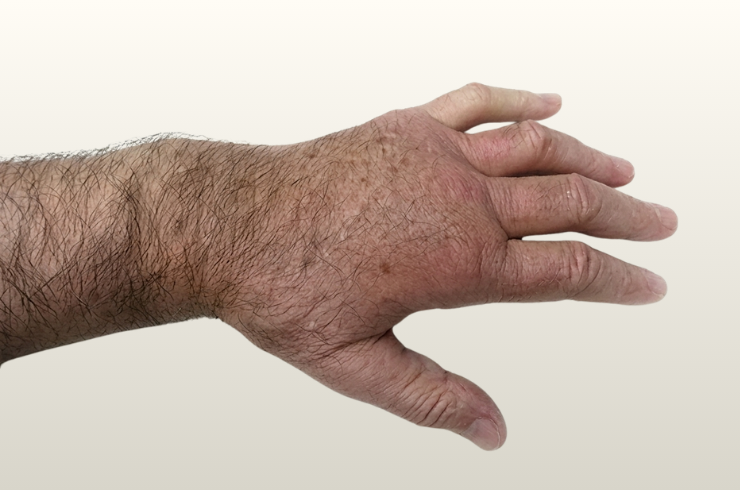
Complex Regional Pain Syndrome Treatment
A debilitating chronic pain condition with no universally established treatment — where our
personalised application of advanced photobiomodulation therapy has achieved significant
symptomatic improvement and return to function in carefully selected patients.
CRPS remains one of neurology’s most challenging conditions — with no universally established protocol.
Conventional approaches often yield limited relief. Through our personalised application of advanced
photobiomodulation therapy, we have observed significant improvement in symptoms and return to normal function in select patients — offering renewed hope where standard treatments have fallen short.
TYPICAL TRIGGERS & CAUSES
Trauma
Fractures & Injury
The most common trigger — bone fractures initiate an exaggerated neuro-inflammatory response disproportionate to the injury
Post-surgical
Post-Surgical Onset
Surgical procedures on limbs can trigger CRPS through nerve injury or prolonged immobilisation
Soft tissue
Soft Tissue Injury
Sprains and crush injuries can initiate central sensitisation and sympathetically-maintained pain.
Disuse
Immobilisation
Prolonged casting or splinting can perpetuate CRPS through disuse-related neuroplastic changes.
CNS
Stroke / CNS Event
Central nervous system lesions can produce CRPS-like features through disrupted sensorimotor integration.
Unknown
Idiopathic
In a subset of patients, CRPS arises spontaneously without any identifiable precipitating event
DIAGNOSIS
Budapest Criteria — Clinical + Supportive Investigations
CRPS is diagnosed using the internationally validated Budapest Criteria — requiring disproportionate continuing pain
plus signs across sensory, vasomotor, sudomotor, and motor/trophic domains. Investigations exclude secondary
causes and establish a personalised treatment baseline
Treatment
Personalised photobiomodulation — where conventional medicine offers limited options
Treatment parameters are individualised to the patient’s pain distribution, affected domains, and clinical response —
adjusted progressively throughout the course.
We apply specific wavelengths of light energy to the affected region — absorbed by mitochondria and cellular
photoreceptors through photobiomodulation. This reduces neurogenic inflammation, modulates the aberrant
sympathetic activity driving CRPS, and promotes tissue repair at a cellular level. The protocol is personalised to each
patient’s symptom distribution and severity.
Where other treatments have not succeeded — meaningful improvement achieved
In patients with CRPS who had limited response to conventional therapies, our personalised photobiomodulation
protocol has delivered significant reduction in pain, allodynia, and autonomic features — alongside meaningful return
to daily function. Individual outcomes vary, and patients are fully counselled on realistic expectations before
treatment begins.
| What Makes Our Practice Different | |||||
|---|---|---|---|---|---|
|
Personalised Protocols
Every plan tailored to the individual
|
Advanced Technology
Cutting-edge non-invasive therapeutic science
|
Mechanism-Based Care
We treat biology, not just symptoms
|
23+ Years Experience
Decades of specialist clinical wisdom
|
Whole Person Approach
Mind, body & lifestyle integrated
|
Objective Outcomes
Measurable results — not just relief
|
Mood Disorder Treatment

Mood disorders are complex mental health conditions that disrupt emotional stability, often leading to persistent sadness, irritability, or intense mood fluctuations. Common conditions include depression, bipolar disorder, and anxiety-related mood changes, all of which can significantly impact one’s personal,
Comprehensive Evaluation by Dr. Sreekanth Vemula
Every recovery journey begins with a detailed clinical and neurological assessment by Dr. Sreekanth Vemula, a senior neurophysician with over 26 years of experience in treating neurological and neuropsychiatric disorders.
His evaluation includes:
- In-depth review of medical and emotional history
- Neurological and psychological function testing
- Identification of biochemical or structural brain factors influencing mood
This precise assessment ensures an accurate diagnosis and a fully personalized care plan.
Integrated Mood Disorder Treatment Approach
Treatment is comprehensive and tailored to each patient’s needs.
It may include:
- Medication therapy for mood stabilization and symptom control
- Psychotherapy and counseling for emotional regulation and coping skills
- Lifestyle and stress-management programs to improve resilience
- Neuromodulation therapies (when indicated) to balance brain activity and enhance emotional stability
For patients experiencing mood-related neurological symptoms such as muscle tension or dystonia, Botulinum Toxin (Botox) injections are available to improve comfort and mobility.
Services
- Epilepsy
- Dystonias
- Mood Disorders
- Vertigo
- Tinnitus
- Balance Disorders
- Obstructive Sleep Apnea
- Peripheral Neuropathy
- Migraine
- Stroke
- Trigeminal Neuralgia
- Alzheimers
- Parkinson's Disease
- Myasthenia Gravis
- Meningitis
- Bell’s Palsy
- Cerebral Palsy
- Brain Injury
- Head Injury
- Restless Leg Syndrome
- Periodic Paralysis
- Scalp Cirsoid Aneurysm
- Krabbe Disease
- Fibromyalgia