Carpal Tunnel Syndrome Treatment in Hyderabad
- Home
- Conditions Treated
- Carpal Tunnel Syndrome
Carpal Tunnel Syndrome Treatment
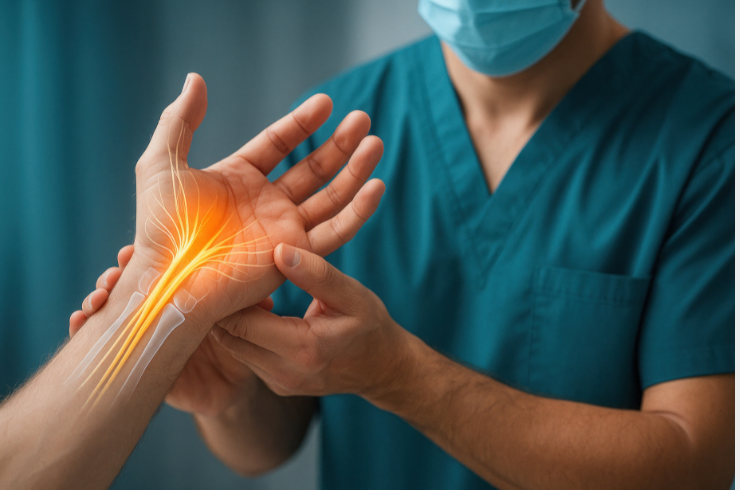
A compressive neuropathy of the median nerve at the wrist — confirmed electrophysiologically and
treated with a personalised, non-invasive protocol that delivers objective reversal of nerve conduction
parameters.
COMMON RISK CONDITIONS
Metabolic
Diabetes Mellitus
Chronic hyperglycemia causes metabolic nerve damage, increasing susceptibility to compression neuropathies.
Endocrine
Hypothyroidism
Thyroid deficiency causes tissue infiltration that narrows the carpal tunnel and compresses the median nerve.
Autoimmune
Rheumatoid Arthritis
Synovial inflammation and tenosynovitis within the carpal tunnel directly compress the median nerve.
DIAGNOSIS
Every patient undergoes a detailed NCS to confirm median nerve dysfunction — measuring latencies, conduction velocities, and amplitudes. This electrophysiological baseline personalises the treatment protocol and benchmarks outcomes.
Treatment Protocol
An advanced, non-invasive approach — personalised to each patient’s nerve conduction profile
No two patients receive identical treatment. Session parameters are calibrated to the severity of nerve conduction
impairment and the underlying cause — adjusted at each visit based on objective findings and clinical response.
We apply a focused mechanical stimulus to the carpal tunnel region over a structured 5-week course — triggering
mechanotransduction. Rather than masking pain, this activates the body’s own biological repair mechanisms:
reducing nerve compression, restoring the endoneurial environment, and regenerating healthy axonal function. The
protocol is personalised to each patient’s NCS baseline
Not just symptom relief — reversal of nerve conduction parameters
Patients experience meaningful reduction in tingling, numbness, and pain alongside measurable electrophysiological reversal on repeat NCS — objective evidence of true nerve healing. Outcomes are consistent because every protocol is personalised.
| What Makes Our Practice Different | |||||
|---|---|---|---|---|---|
|
Personalised Protocols
Every plan tailored to the individual
|
Advanced Technology
Cutting-edge non-invasive therapeutic science
|
Mechanism-Based Care
We treat biology, not just symptoms
|
23+ Years Experience
Decades of specialist clinical wisdom
|
Whole Person Approach
Mind, body & lifestyle integrated
|
Objective Outcomes
Measurable results — not just relief
|
Mood Disorder Treatment

Mood disorders are complex mental health conditions that disrupt emotional stability, often leading to persistent sadness, irritability, or intense mood fluctuations. Common conditions include depression, bipolar disorder, and anxiety-related mood changes, all of which can significantly impact one’s personal,
Comprehensive Evaluation by Dr. Sreekanth Vemula
Every recovery journey begins with a detailed clinical and neurological assessment by Dr. Sreekanth Vemula, a senior neurophysician with over 26 years of experience in treating neurological and neuropsychiatric disorders.
His evaluation includes:
- In-depth review of medical and emotional history
- Neurological and psychological function testing
- Identification of biochemical or structural brain factors influencing mood
This precise assessment ensures an accurate diagnosis and a fully personalized care plan.
Integrated Mood Disorder Treatment Approach
Treatment is comprehensive and tailored to each patient’s needs.
It may include:
- Medication therapy for mood stabilization and symptom control
- Psychotherapy and counseling for emotional regulation and coping skills
- Lifestyle and stress-management programs to improve resilience
- Neuromodulation therapies (when indicated) to balance brain activity and enhance emotional stability
For patients experiencing mood-related neurological symptoms such as muscle tension or dystonia, Botulinum Toxin (Botox) injections are available to improve comfort and mobility.
Services
- Epilepsy
- Dystonias
- Mood Disorders
- Vertigo
- Tinnitus
- Balance Disorders
- Obstructive Sleep Apnea
- Peripheral Neuropathy
- Migraine
- Stroke
- Trigeminal Neuralgia
- Alzheimers
- Parkinson's Disease
- Myasthenia Gravis
- Meningitis
- Bell’s Palsy
- Cerebral Palsy
- Brain Injury
- Head Injury
- Restless Leg Syndrome
- Periodic Paralysis
- Scalp Cirsoid Aneurysm
- Krabbe Disease
- Fibromyalgia