Encephalitis Treatment
- Home
- Conditions Treated
- Encephalitis Treatment
Encephalitis Treatment
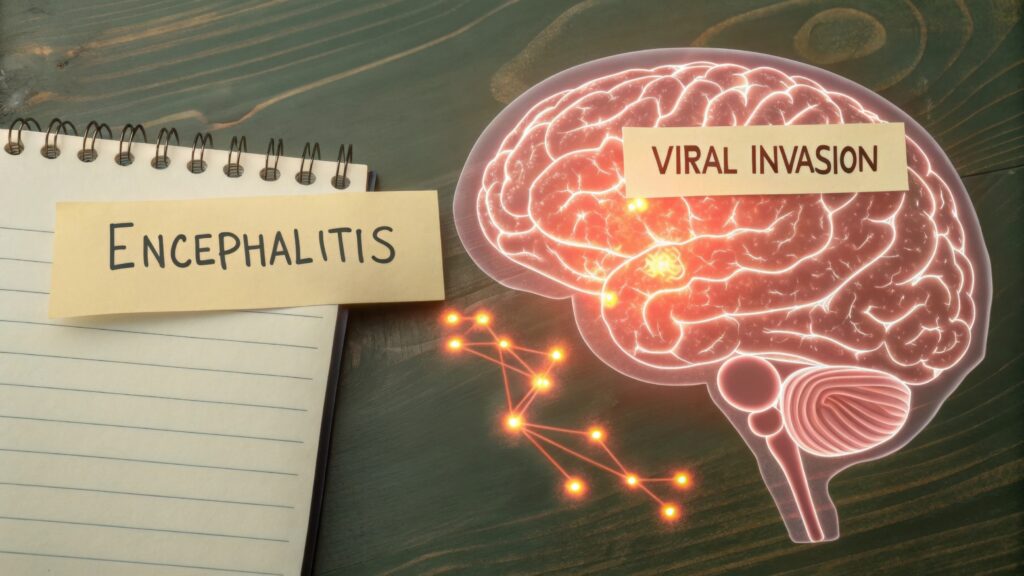
Encephalitis is a serious neurological condition in which the brain becomes inflamed, often due to viral infections or autoimmune reactions. It can cause fever, headache, confusion, seizures, and neurological deficits. Prompt evaluation and personalized care are essential to reduce complications, protect brain function, and support recovery.
Common Risk Factors
Infections
Viral infections, including herpes simplex virus, Japanese encephalitis virus, and other viral pathogens, are the most common causes.
Autoimmune Conditions
In some cases, the body’s immune system mistakenly attacks the brain, leading to autoimmune encephalitis.
Age & Health Factors
Infants, older adults, and individuals with weakened immune systems are more susceptible.
Environmental & Lifestyle Factors
Exposure to mosquitoes, ticks, or contaminated food/water can increase the risk of infectious encephalitis.
DIAGNOSTIC WORKUP
Clinical & Neurological Assessment + Laboratory Testing
Diagnosis begins with a careful neurological examination to assess mental status, reflexes, muscle strength, and coordination. Blood tests and cerebrospinal fluid (CSF) analysis from a lumbar puncture help identify infectious or autoimmune causes. MRI or CT imaging of the brain detects inflammation, swelling, or lesions. EEG may be used to evaluate seizure activity.
Treatment Protocol
A Personalised Multi-Approach Plan — combining medications, therapy, supportive care, and advanced interventions.
Each plan is customized based on the type and severity of encephalitis, the causative agent, and individual patient needs.
Medication Therapy
Antiviral medications are prescribed for viral causes, while immunosuppressive or corticosteroid therapy may be used for autoimmune encephalitis. Additional medications help manage fever, seizures, or neurological symptoms.
Physical & Occupational Therapy
Therapies focus on restoring motor function, coordination, and strength, supporting recovery of daily activities and mobility.
Cognitive & Speech Therapy
Cognitive exercises and speech therapy help address memory, concentration, and communication difficulties resulting from brain inflammation.
Lifestyle & Support Programs
Structured routines, nutritional support, rest, and caregiver guidance enhance recovery and prevent relapse or complications.
Advanced Interventions
In severe cases, intensive care support may be required to manage brain swelling, seizures, or respiratory complications. Rehabilitation programs are tailored to patient progress to maximize functional recovery.
Together, these therapies work on the brain, nervous system, and daily function, helping patients recover strength, cognitive abilities, and independence.
| What Makes Our Practice Different | |||||
|---|---|---|---|---|---|
|
Personalised Protocols
Every plan tailored to the individual
|
Advanced Technology
Cutting-edge non-invasive therapeutic science
|
Mechanism-Based Care
We treat biology, not just symptoms
|
23+ Years Experience
Decades of specialist clinical wisdom
|
Whole Person Approach
Mind, body & lifestyle integrated
|
Objective Outcomes
Measurable results — not just relief
|
Mood Disorder Treatment

Mood disorders are complex mental health conditions that disrupt emotional stability, often leading to persistent sadness, irritability, or intense mood fluctuations. Common conditions include depression, bipolar disorder, and anxiety-related mood changes, all of which can significantly impact one’s personal,
Comprehensive Evaluation by Dr. Sreekanth Vemula
Every recovery journey begins with a detailed clinical and neurological assessment by Dr. Sreekanth Vemula, a senior neurophysician with over 26 years of experience in treating neurological and neuropsychiatric disorders.
His evaluation includes:
- In-depth review of medical and emotional history
- Neurological and psychological function testing
- Identification of biochemical or structural brain factors influencing mood
This precise assessment ensures an accurate diagnosis and a fully personalized care plan.
Integrated Mood Disorder Treatment Approach
Treatment is comprehensive and tailored to each patient’s needs.
It may include:
- Medication therapy for mood stabilization and symptom control
- Psychotherapy and counseling for emotional regulation and coping skills
- Lifestyle and stress-management programs to improve resilience
- Neuromodulation therapies (when indicated) to balance brain activity and enhance emotional stability
For patients experiencing mood-related neurological symptoms such as muscle tension or dystonia, Botulinum Toxin (Botox) injections are available to improve comfort and mobility.
Services
- Epilepsy
- Dystonias
- Mood Disorders
- Vertigo
- Tinnitus
- Balance Disorders
- Obstructive Sleep Apnea
- Peripheral Neuropathy
- Migraine
- Stroke
- Trigeminal Neuralgia
- Alzheimers
- Parkinson's Disease
- Myasthenia Gravis
- Meningitis
- Bell’s Palsy
- Cerebral Palsy
- Brain Injury
- Head Injury
- Restless Leg Syndrome
- Periodic Paralysis
- Scalp Cirsoid Aneurysm
- Krabbe Disease
- Fibromyalgia