Parkinson’s Disease
- Home
- Conditions Treated
- Parkinson’s Disease
Parkinson's Disease
A progressive neurodegenerative disorder affecting motor and non-motor function. Beyond optimised
medications, we offer advanced neuroplasticity enhancement therapy — among the first in India to do
so — personalised to each patient’s symptom profile and disease stage
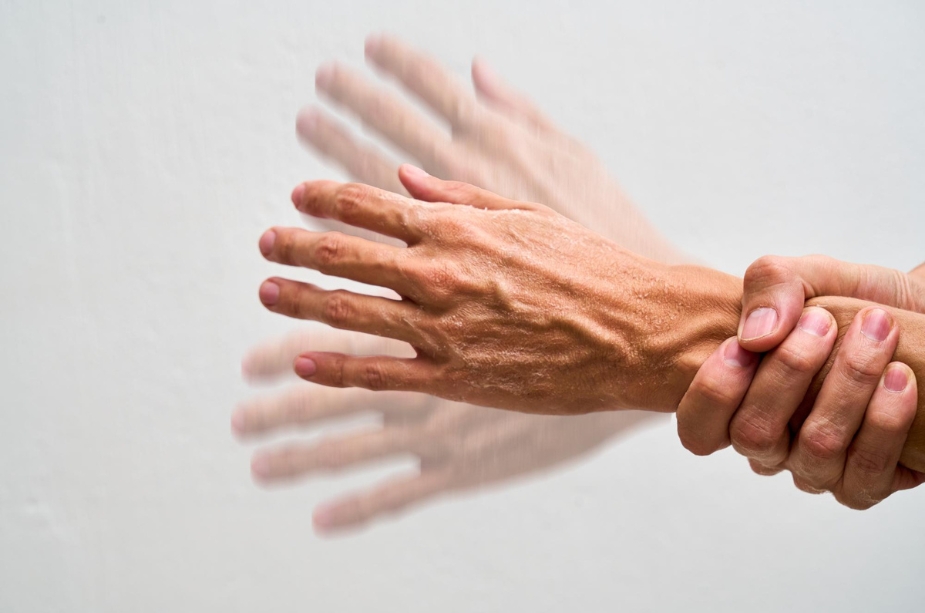
SYMPTOMS WE ADDRESS - MOTOR SYMPTOMS
Tremor
Resting tremor of hands and limbs — the hallmark presentation
Rigidity
Increased muscle tone causing stiffness.
Bradykinesia
Slowness of movement affecting walking, expression, and fine tasks
Freezing of Gait
Sudden inability to initiate walking — a major cause of falls
NON-MOTOR SYMPTOMS
Cognitive Decline
Memory difficulties and slowing of thought
Mood Disorders
Depression and anxiety — often preceding motor symptoms
Sleep Disturbance
REM sleep disorder, daytime sleepiness, insomnia
Autonomic Dysfunction
Orthostatic hypotension, constipation, anosmia
FREEZING OF GAIT — SPECIFICALLY ADDRESSED
Freezing of Gait — one of the most disabling and treatment-resistant features of Parkinson’s — has shown meaningful
improvement with our neuroplasticity enhancement protocol. By modulating the motor circuits involved in gait initiation,
we help reduce freeze frequency and duration, improving walking confidence and reducing fall risk.
DIAGNOSIS
Clinical Diagnosis — UK Brain Bank Criteria
Parkinson’s Disease is a clinical diagnosis based on presenting symptoms.
MRI brain excludes structural mimics.
DAT-SPECT confirms dopaminergic deficiency in uncertain cases.
Treatment Approach
Optimised medications as the foundation — neuroplasticity enhancement raises the ceiling of recovery
Treatment is personalised to disease stage, dominant symptom burden (motor vs non-motor), and the patient’s
specific goals — adjusted at each review based on clinical progression
Optimised Dopaminergic Medications
Levodopa/carbidopa, dopamine agonists, MAO-B inhibitors, and COMT inhibitors are selected and titrated to each
patient’s symptom profile and disease stage — maximising motor benefit while minimising side effects.
Neuroplasticity Enhancement — improving function beyond medications (off-label use)
We deliver targeted energy to relevant motor and cognitive networks — promoting neuroplasticity at the level of
individual neural circuits. Rather than simply suppressing symptoms, this stimulates synaptic remodelling and
circuit-level reorganisation — improving motor function, cognitive performance, mood, and gait. Non-invasive, no
structural damage to brain tissue, and fully reversible. Protocol is personalised to the patient’s dominant symptoms.
Every patient is fully
counselled on the investigational status, realistic expectations, and the distinction from surgical alternatives before
treatment begins.
Meaningful improvement in quality of life — without structural risk
Patients experience improvement in motor function, freezing episodes, cognitive clarity, and mood. The personalised
protocol — adjusted to each patient’s dominant symptoms and disease stage — offers something surgical
alternatives cannot: reversibility, no structural damage, and the possibility of ongoing optimisation as the disease
evolves
| What Makes Our Practice Different | |||||
|---|---|---|---|---|---|
|
Personalised Protocols
Every plan tailored to the individual
|
Advanced Technology
Cutting-edge non-invasive therapeutic science
|
Mechanism-Based Care
We treat biology, not just symptoms
|
23+ Years Experience
Decades of specialist clinical wisdom
|
Whole Person Approach
Mind, body & lifestyle integrated
|
Objective Outcomes
Measurable results — not just relief
|
What is Parkinson’s Disease?
Parkinson’s disease is a progressive neurological disorder that affects movement control. It happens when nerve cells in the brain that produce a critical chemical messenger are damaged or die. This leads to difficulty in coordinating smooth, controlled movements, which results in symptoms like tremors, stiffness, and issues with balance and coordination.
Symptoms of Parkinson’s Disease
Parkinson’s disease symptoms appear gradually and can differ from person to person. In the early stages, the symptoms may be subtle. Common signs include:
- Tremors: Shaking in the hands, arms, legs, or face, often noticeable when at rest.
- Slowness of Movement: Difficulty in starting movement or performing routine tasks more slowly.
- Muscle Rigidity: Stiffness in the muscles, leading to discomfort and limited flexibility.
- Balance Problems: Difficulty maintaining stability while standing or walking.
- Other Symptoms: Changes in speech, facial expressions, and difficulty swallowing or speaking clearly.
These symptoms can worsen over time, but early management can help ease the progression and improve daily function.
What Causes Parkinson’s Disease?
Although the exact cause of Parkinson’s disease is unknown, several factors may contribute to its development:
- Genetics: While most cases are not inherited, a family history of Parkinson’s can increase the risk of developing the disease.
- Age: Parkinson’s disease generally affects people over the age of 60, with the risk increasing with age.
- Environmental Factors: Exposure to certain toxins or chemicals in the environment may play a role in some cases.
Treatment Options for Parkinson’s Disease
While there is no cure for Parkinson’s disease, there are various treatment options that aim to manage symptoms and improve the quality of life. The right treatment plan depends on the severity of symptoms and the individual’s specific needs. Treatment strategies include:
- Medications:
Treatment primarily focuses on using medications that help replenish or mimic the effects of the chemical messenger responsible for controlling movement. These medications can alleviate symptoms like tremors, muscle stiffness, and slowness of movement. - Physical Therapy:
A structured physical therapy regimen can improve strength, flexibility, and balance. These exercises help reduce muscle rigidity and enhance coordination, allowing patients to maintain their independence and mobility for longer periods. - Lifestyle Modifications:
Regular exercise and maintaining a healthy lifestyle can help manage Parkinson’s symptoms. Activities like walking, stretching, and yoga can improve movement and balance, while a healthy diet contributes to overall well-being.
When to Consult a Neurophysician for Parkinson’s Disease
If you experience symptoms such as tremors, muscle stiffness, or difficulty with movement, it is important to consult a neurophysician. An early diagnosis and treatment plan can significantly improve your quality of life and help manage the symptoms effectively.
Services
- Epilepsy
- Dystonias
- Mood Disorders
- Vertigo
- Tinnitus
- Balance Disorders
- Obstructive Sleep Apnea
- Peripheral Neuropathy
- Migraine
- Stroke
- Trigeminal Neuralgia
- Alzheimers
- Parkinson's Disease
- Myasthenia Gravis
- Meningitis
- Bell’s Palsy
- Cerebral Palsy
- Brain Injury
- Head Injury
- Restless Leg Syndrome
- Periodic Paralysis
- Scalp Cirsoid Aneurysm
- Krabbe Disease
- Fibromyalgia